Curriculums
that talk back.
These aren’t built to be watched. They’re built to be stepped into and added to — fifth grade or college seminar, and it keeps growing because the next student carries it forward.
Everything below runs on a school Chromebook · nothing to install
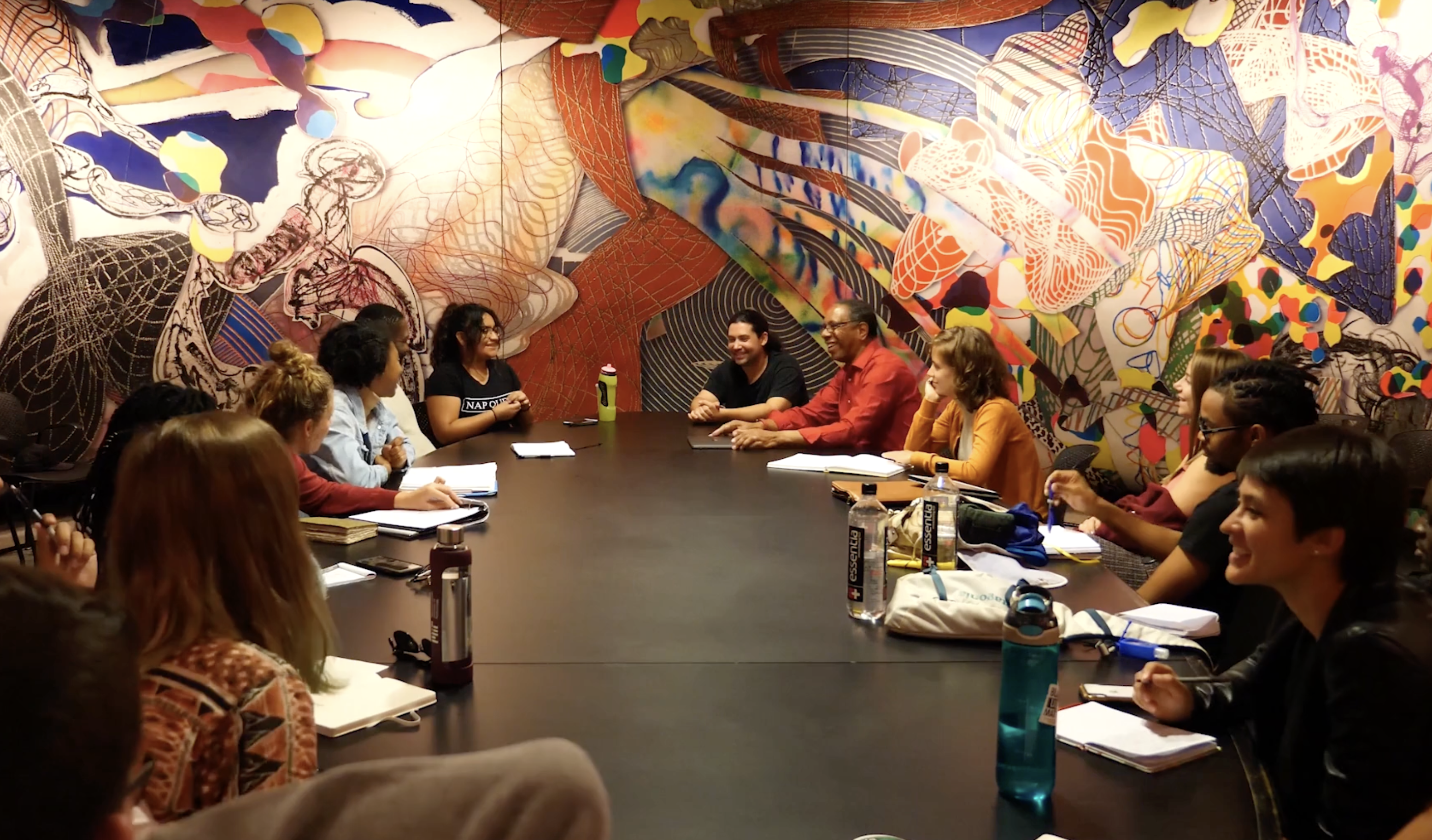
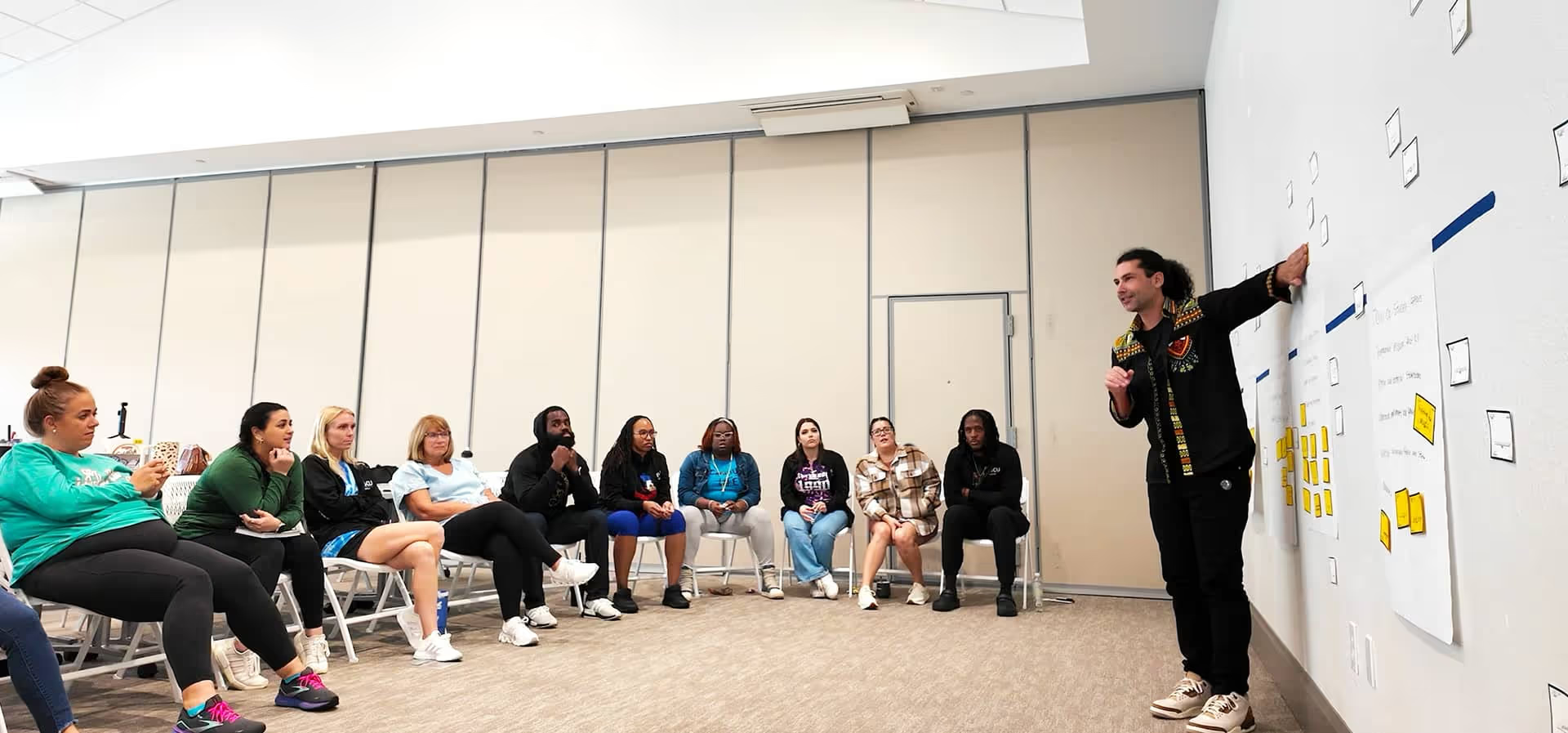
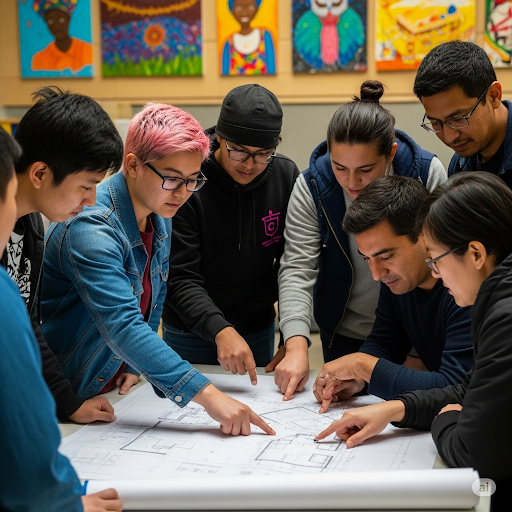
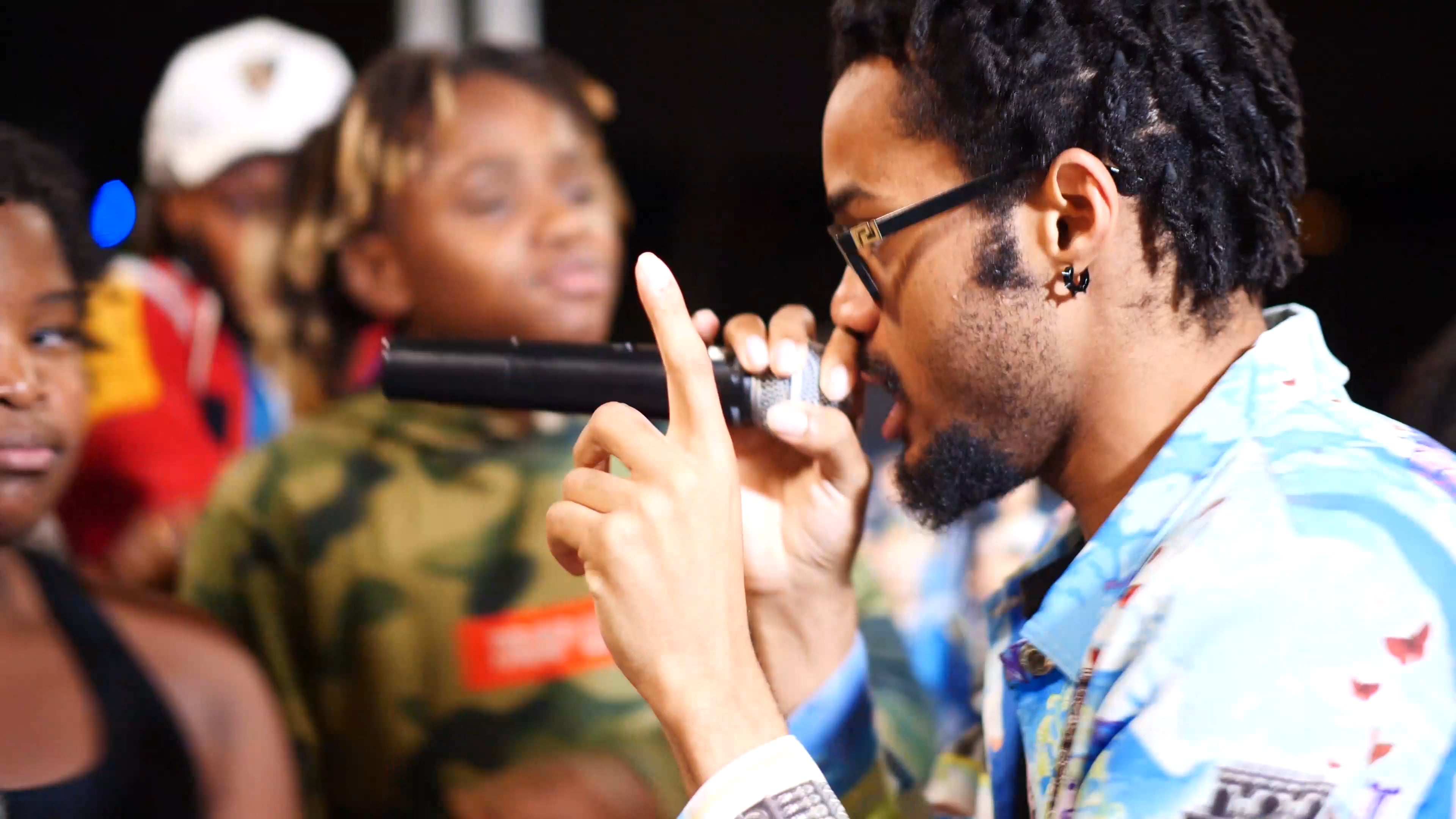
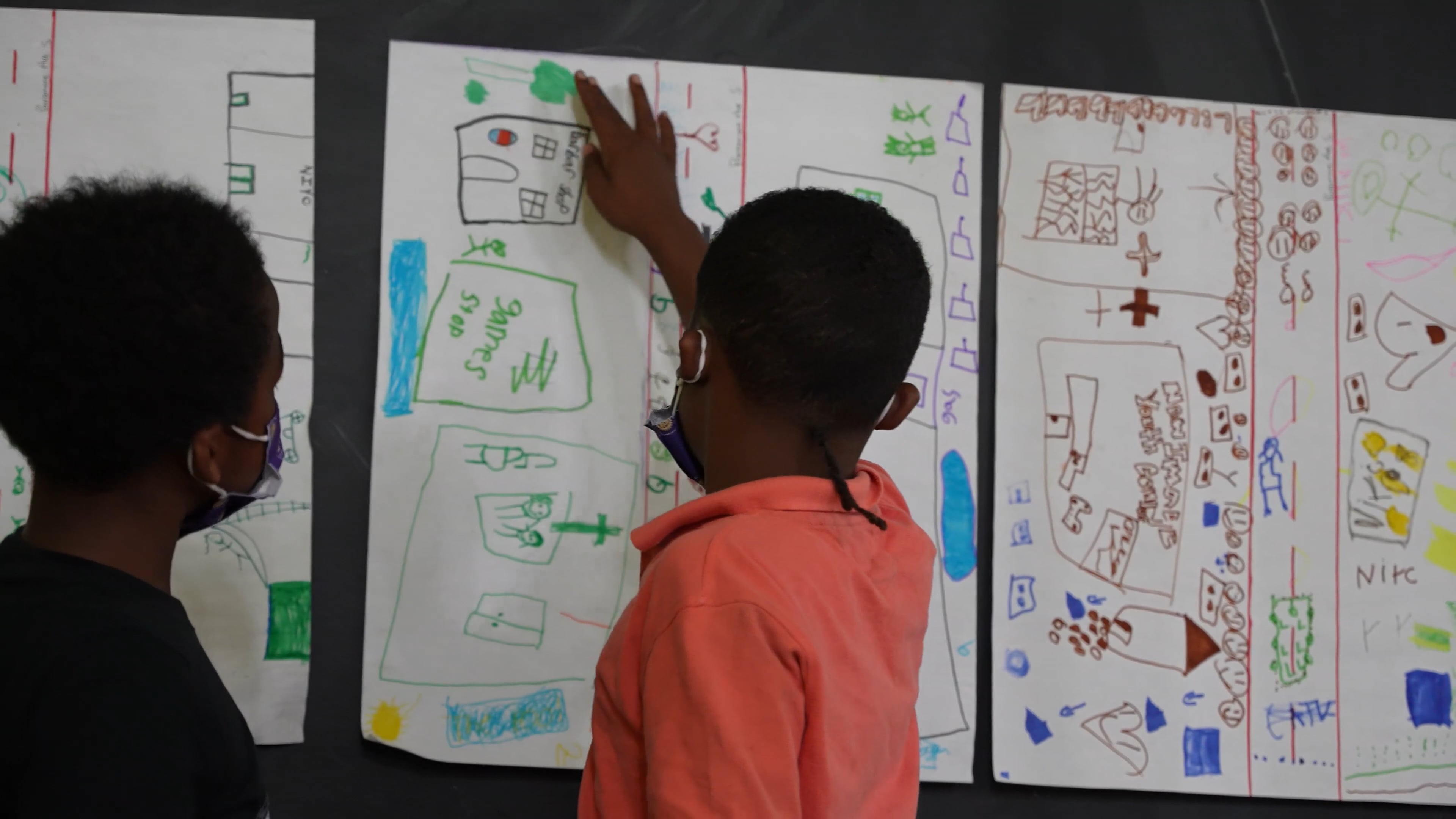
It isn't a film screening.
It's a circle.
Every piece runs on whatever surface the room already has. The curriculum is what makes it education. The civic loop is what makes it civic — whatever a class puts in travels to the next room that opens it.
360° curriculums · middle school through university
Interactive 360° pieces students engage with — not just watch. Discussion prompts, dialogue questions, comparison across cultures and decades. Aligned to social studies, ELA, ESOL, ethnic studies, civic studies. Running in university classrooms summer and fall 2026.
Build your own 360° space
Students, youth groups, whole neighbourhoods. We show you how to capture a place, gather the voices, and shape the piece — phone in hand to first cut. What the group makes, the group keeps.
A growing library, free for community use
The Table of Free Voices, Parramore / NIYC, the Crossroads, El Mercado Vive — and more arriving. Each piece is a 360° space with discussion prompts, primary sources, and the consent / citation receipts. Free for educator and community use.
The knowledge keeps growing
For our 20th-anniversary TOFV piece, anyone walking through the work — in a planetarium, a science museum, on a phone — can add their own question, voice, or testimony. We hold it. We carry it forward into the next showing.
Seven things you could
use Monday morning.
No account, no license key, no IT ticket. All of these run on a school Chromebook. Take the link, put it on the board, see what the room does with it.
Ask 116 strangers from 2006 a question
In one day in Berlin, 116 people answered 99 questions on camera — 10,583 answers, all transcribed and attributed. Have a student type in “fear” or “my country” and watch people who have never met answer them across twenty years. Great for ELA, social studies, ethnic studies, and any lesson about evidence.
Let them argue with Epicurus out loud
He answers in real time from the surviving texts, and cites which one. Students bring him death, or their phone — and he remembers what they brought last time.
Stand inside four communities in one period
A Clarksdale juke joint, a Parramore block, the Puebla market, the Berlin table — on a laptop, or hand a Quest around. Each story threads to the one it rhymes with somewhere else. That’s the lesson.
Have them build their own world
The unit that lands hardest: students make one. Start from a world we built, record voices from their own block on a phone, place them, hand in a link. It exports as a single file they own.
We open this one with you →A five-minute civics bell-ringer
A weather report for democracy, rewritten each morning off six public sources — the courts, the Federal Register, Congress, the streets. Eight languages, one written for a kid. Read the sentence; ask the room if they agree.
Turn a word into something alive
A word becomes 3D type that coils, ignites or storms. Open a room and the whole class edits it at once. Good for a warm-up, a poetry unit, or the ten minutes before the bell.
We open this one with you →Turn the block outside into a listening room
Headphones on, walk, and voices rise where they belong. Lay your students’ own recordings along a route past the school — oral history that only plays where the history happened.
Want the discussion guide, the standards alignment, or a facilitator on the call the first time you run one? Ask us — that part is free too.
Four rooms, open now.
Each one is live at its own address, with a discussion guide, primary sources, and a way for students to add their own voice.
We bring content,
curriculum, and
practice.
We bring the room, the questions, and the practice — or hand the whole thing over so you can run it without us. Most of the time it runs on a projector and a wall, or the screens already on your desks. No dome required.
One classroom, one piece
Pick a piece from the library. We provide the curriculum, the discussion guide, and a half-hour facilitator brief. Students engage in their browser. No equipment beyond what's in the room.
A semester · a cohort
Multi-piece arc — a semester or term across grade levels. Includes a workshop on building 360° spaces. Co-led with Civic Designers; sliding scale available.
A community evening · a dome event
Bring the piece to your community center, library, or local planetarium. We help match the venue, provide the file, and share a facilitation guide so the cohort can lead the conversation themselves.
“Does our education system
really enable a child to bloom?”
One hundred and four people answered this one on camera. They do not agree. That disagreement is the lesson — every answer is transcribed, attributed and searchable, so a class can put four of them side by side and argue it out.
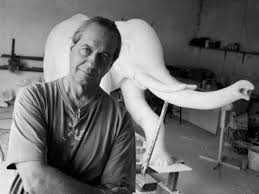
The child doesn’t bloom because of that which it blooms at school.
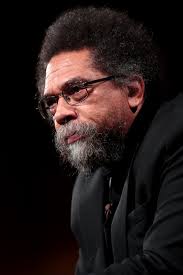
It depends on which educational system we are talking about — and it depends on what we mean by bloom.
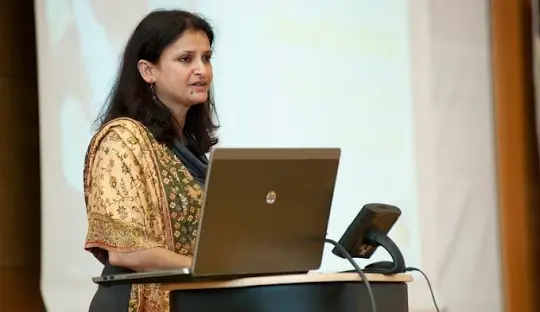
The way the education system is working today, it does not basically enable a child to bloom.

Education is the first tool to mold you as the best human being.
The table is being set again — and this time the question is yours.
Same table, 9 September 2026. Students add the question they carry, and see what other classes — in other countries — are carrying too.
“What question do you carry — for the world?”
Play with soundVoice the question
Each student adds the question they bring. The class sees what other students — across the country, across the world — are also carrying.
Host the circle
The piece runs as a fulldome show, a gallery installation, or an immersive multi-wall room. Visitors leave their voice. Each showing keeps growing.
Add your voice
From your phone or kitchen. Speak, type, or sign — in any language. Held with consent and citation.
Nobody had to go anywhere.
A class put on headsets and sat down at a table that was set in 2006. They asked their own question into it. It is still there, with their name on it, for the next class that comes.
The archive · ask us for the password ↗